India Business News: Indian stock markets are poised for a constructive 2026, driven by an improving earnings cycle, strong domestic liquidity, and normalizing valuations,
Sensex, Nifty at lifetime highs: Where are Indian markets headed in 2026 & will they outperform gold & EMs? Here’s the outlook
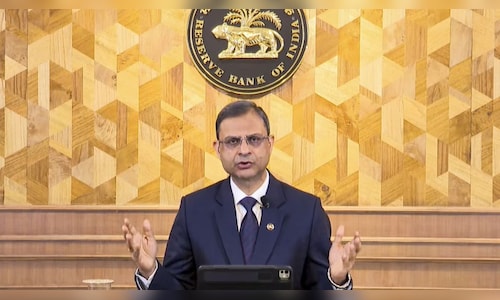
Indian stock markets are poised for a constructive 2026, driven by an improving earnings cycle, strong domestic liquidity, and normalizing valuations, says Ajay Menon, MD & CEO – Wealth Management, Motilal Oswal Financial Services. Which sectors should investors focus on? Will other emerging markets and even gold continue to outperform Indian equity benchmarks in 2026 as well?
The struggle for markets to outperform global peers was real - despite the fact that the Indian economy has strong economic fundamentals. (AI image)
Sensex and Nifty have had a rollercoaster ride this year - 2025 is a year when markets have struggled to go above the highs they hit in the second half of 2024 - only managing to hit lifetime highs in November-end. It’s been a volatile year globally - specifically due to the tariff war unleashed by US President Donald Trump. But even before Trump made his trade policies clear, Indian stock markets had been seeing exodus due to their high valuations. The struggle for markets to outperform global peers was real - despite the fact that the Indian economy, which is the fastest growing major country in the world, has strong economic fundamentals backing it. As of now BSE Sensex is up approximately 8% year-to-date, and Nifty50 has risen over 9.5% in the same time period. The macroeconomic backdrop is improving, supported by policy continuity, improving system liquidity and targeted fiscal initiatives that are aimed at accelerating consumption and investment. After remaining elevated last year, inflation has eased below the RBI’s tolerance band, aided by one of the strongest monsoons in five years, which has prompted RBI to turn growth-oriented and cut repo rate and Cash Reserve Ratio (CRR) by 100 basis points.So, which way are stock markets headed in 2026? Will other emerging markets and even gold continue to outperform Indian equity benchmarks in 2026 as well? Which sectors should investors focus on? Ajay Menon, MD & CEO – Wealth Management, Motilal Oswal Financial Services shares his outlook for the stock market in an exclusive interview with TOI.
Where are Sensex & Nifty headed in 2026?
Ajay Menon believes that the outlook for Indian equities for 2026 is turning constructive, driven by an improving earnings cycle, resilient domestic liquidity and valuations normalising after a prolonged consolidation phase. The positive backdrop is being further supported by improving foreign institutional flows, low inflation, favourable policy direction and easing global uncertainty — collectively strengthening visibility for a gradual upcycle, he tells TOI in an exclusive interview.
Sensex & Nifty 10 Yr Returns
After delivering a muted earnings growth of only ~5% in FY25, India Inc. appears to be at the cusp of an earnings recovery supported by reviving consumer demand and a gradual pickup in capex – both public and private. “Earnings growth is now expected to accelerate meaningfully, with a rebound of ~10–15% YoY projected over FY26–27. Valuations have also reverted closer to long-term averages at around 21x 1-year forward P/E,” he said.
What factors will drive Indian stock markets in 2026?
Menon says that RBI’s repo and CRR cuts have begun releasing liquidity into the system, positioning credit growth to re-accelerate into double digits. In addition, tax-related reforms—particularly GST restructuring and personal income tax relief—are beginning to reflect stronger discretionary spending trends. “Capex momentum, muted during the last year’s election cycle, is expected to resume meaningfully as the government front-loads spending once again this year. On the external front, geopolitical risk has moderated, and newly concluded FTAs are shaping a clearer export framework, while advanced-stage tariff discussions with the United States further enhance long-term trade visibility. Together, resilient GDP data and recent upgrades by major rating agencies, forms a strong macro base for equity market performance through 2026,” he opines. Also Read | GDP grows at 8.2%, fastest in 6 quarters: What the data really says about Indian economy - explainedBut what about external headwinds? Ajay Menon cautions that external shocks can still create interim volatility, particularly around geopolitics and global rate expectations. However, Menon is confident that India is entering 2026 from a position of notable strength. Earnings momentum has turned decisively upward, reforms have offered genuine productivity gains, and corporate balance sheets are significantly deleveraged. The breadth of earnings has begun to expand, mid-cycle margin drivers are visible and domestic liquidity is exceptionally strong, he says. “These factors provide the market with a buffer that is meaningfully larger than in past cycles. Even if global uncertainty fuels temporary dislocations, the long-term direction for Indian equities remains positive and fundamentally earnings-led,” he adds.And, any risks to this strength? A delay in the India-US trade deal would be a negative factor for the markets. This could temper export momentum and sentiment around manufacturing-linked sectors. Similarly, if the anticipated capex revival disappoints, the earnings recovery narrative—already uneven across sectors—may face pressure, says Menon. “Valuation sensitivity is another watch point, especially in parts of the mid- and small-cap universe where premiums remain above long-term averages. In such pockets, even a mild earnings miss or liquidity moderation could lead to sharper corrections relative to large caps. While domestic macro conditions are improving, Nifty earnings delivery has been patchy in recent quarters, reinforcing the need for consistency. Externally, renewed geopolitical disruptions or a slower-than-expected global growth cycle could introduce bouts of volatility,” he adds.
Which sectors should you bet on?
Ajay Menon tells TOI that sector leadership in 2026 is expected to be broad-based, with strength likely to emerge from diversified financials, consumption discretionary (autos, travel, telecom), capital goods, digital and technology.
Within financials, asset quality remains resilient and well-capitalized balance sheets position lenders to benefit from improving liquidity conditions and a revival in credit growth following the recent rate cuts.
Consumption-oriented sectors should gain from GST simplification, personal tax relief and lower borrowing costs, supporting upgrades in discretionary demand.
Capital goods and industrials are poised to benefit from the next leg of the government-led capex cycle, which is expected to revive.
Meanwhile, the technology sector enters 2026 on stronger footing as the US rate cycle turns supportive and enterprise spending visibility improves, driven by AI-led transformation and multi-year digital adoption themes.
Going into 2026, long-term opportunities are likely to centre around consumption, financials, manufacturing scale-up and sustainability.
Consumption remains a core theme as tax reforms, rising incomes and easing borrowing costs support both mass-market and discretionary demand across autos, travel, retail and branded consumer categories.
The BFSI ecosystem should continue to benefit from the financialisation of household savings, stronger liquidity, improving credit growth and rapid digital penetration.
Healthcare also offers multi-year visibility backed by higher public spending, PLI-linked capacity build-out and rising insurance coverage. Manufacturing and supply-chain localisation — spanning semiconductors, defence, EMS and strategically incentivised sectors — is set to gain traction under the government’s self-reliance agenda.
Finally, early-stage sustainability themes such as EV batteries, recycling and circular-economy solutions are emerging as credible long-term growth vectors. Collectively, these themes align with improving earnings prospects and represent where the next leg of structural market leadership may evolve, says Menon.
The role of domestic and foreign investors in India’s stock market outlook
Just like its economic story, India’s stock market is also largely driven by domestic investors. This category of investors continues to anchor India’s equity markets and are likely to remain the most important stabilising force in 2026, believes Ajay Menon. SIP flows touched a record ₹294 billion in September, taking quarterly contributions to an unprecedented ₹861 billion, while industry assets have scaled ₹77 trillion, with equities now accounting for over half of total AUM. Demat-account additions have remained robust — up ~21% over the past year, signalling broadening retail participation and the continuing financialisation of household savings. Also Read | PPF calculator: Public Provident Fund can make you a crorepati, but is it the right investment option for you? Explained “Nevertheless, penetration remains modest: only ~9.5% of Indian households currently invest in market-linked instruments. This under-penetration suggests there is still a very large untapped pool of savings that could shift into equities or mutual funds over time,” says Menon. “Thus, rising base is helping in comfortably absorbing a large supply of equity issuance — from IPOs to sizable QIPs, without disrupting secondary-market stability. With consistent monthly flows and a structurally growing investor base, domestic capital is set to play an even larger role in driving market resilience and shaping return outcomes in the year ahead,” he adds. But 2025 has been a year when foreign institutional investors (FIIs) have exited the Indian equity markets in a big way. FII exodus has been the main reason why Nifty and Sensex have underperformed, and seen a volatile year.FIIs will remain important in shaping the magnitude of market moves, particularly during risk-on phases in 2026 as well. But unlike earlier cycles, they are no longer the sole determinant of market direction, feels Menon. “While India underperformed other emerging markets over the past one year — with MSCI EM gaining significantly more than Indian benchmarks — improving earnings visibility and reasonable valuations increase the likelihood of flows turning more constructive. As global sentiment normalises, India may begin to recapture relative performance leadership,” he says. “However, the defining difference today is that domestic liquidity has become the core engine of market resilience, while foreign flows have become more cyclical amplifiers than structural trend-setters,” he explains. And while FIIs have sold heavily in the secondary market, India’s IPO market has attracted significant foreign investor interest this year. 2026 is also expected to be another active year for India’s primary markets. Several large, well-known companies — including Reliance Jio, NSE and Flipkart — are widely expected to explore IPOs, reflecting the growing depth of India’s capital markets and confidence among prospective issuers. “With domestic liquidity at record levels, strong SIP flows and rising demat participation, recent experience also shows that the market has the capacity to absorb sizable IPO and QIP supply without unsettling secondary-market sentiment. For investors, a disciplined framework remains key. The focus should be on the company’s long-term growth potential, the durability of its business model and the strength of its management and governance. Pricing will continue to matter — even high-quality businesses can disappoint if valuations are stretched. Understanding whether the proceeds fund future growth or simply provide an exit, and how capital will be deployed, also helps assess long-term value creation,” Menon advises.
Gold vs Sensex - which should be the mainstay of your portfolio?
Gold has outperformed Sensex in the recent past and its record rally amidst global market uncertainties has brought renewed focus on the yellow metal. But how much of your portfolio should be gold? Gold has delivered exceptionally strong returns this year, with YTD gains of over 55% in dollar terms, supported by heightened geopolitical uncertainty and periods of global risk aversion. Its performance reflects the volatility and shifting macro sentiment that have shaped global equity markets this year.
Sensex & Gold 10 Yr Returns
However, Menon is of the view that equities continue to remain the primary long-term wealth-creation asset class, supported by improving earnings visibility, resilient domestic flows and India’s broader structural growth momentum. “As we look ahead to 2026, a balanced allocation remains prudent — keeping equities at the core for long-term compounding, while retaining a measured exposure to gold as a hedge against bouts of uncertainty. Gold helps protect portfolios when volatility rises, while equities enable participation in long-term value creation. A calibrated, diversified approach allows portfolios to remain resilient while still benefiting from India’s growth trajectory,” he says.
How will Indian markets perform compared to Emerging Markets?
India remains one of the strongest growing economies within the emerging-market landscape. In fact, from a GDP growth perspective, India’s real GDP growth for the second quarter beat all analysts’ expectations at 8.2% - helping India retain the tag of being the fastest growing major economy in the world. MOFSL’s Menon notes that the recent sovereign rating upgrade by S&P — its first in 18 years — reinforces improved macro stability and policy credibility. Growth expectations also stand out, with most agencies forecasting GDP expansion of ~6.5–7% over FY26–27, meaningfully higher than the broader EM average in the mid-4% range.
Sensex & MSCI EMs 10 Yr Returns
Menon is of the view that while markets like Taiwan and Korea have outperformed India over the past year, India enters 2026 with a healthier earnings cycle, deeper domestic liquidity, stronger governance frameworks and a more diversified economic engine driven by consumption, credit and capex. “With index earnings expected to compound at double digits through FY27 and valuations near long-term averages, India is well placed to close the recent relative performance gap and reassert leadership among EM peers — with the next phase of returns likely to be driven by improving fundamentals,” he adds.(Disclaimer: Recommendations and views on the stock market, other asset classes or personal finance management tips given by experts are their own. These opinions do not represent the views of The Times of India)
End of Article