COP30 Brazil: India challenges EU CBAM, urging equity in climate trade measures. CEEW research highlights industry response and global implications.
Opinion | The Butterfly Effect That Is The Carbon Border Adjustment Mechanism
On one hand, CBAM has spurred many countries to initiate domestic carbon pricing measures. On the other, it has triggered ripples of mistrust among countries
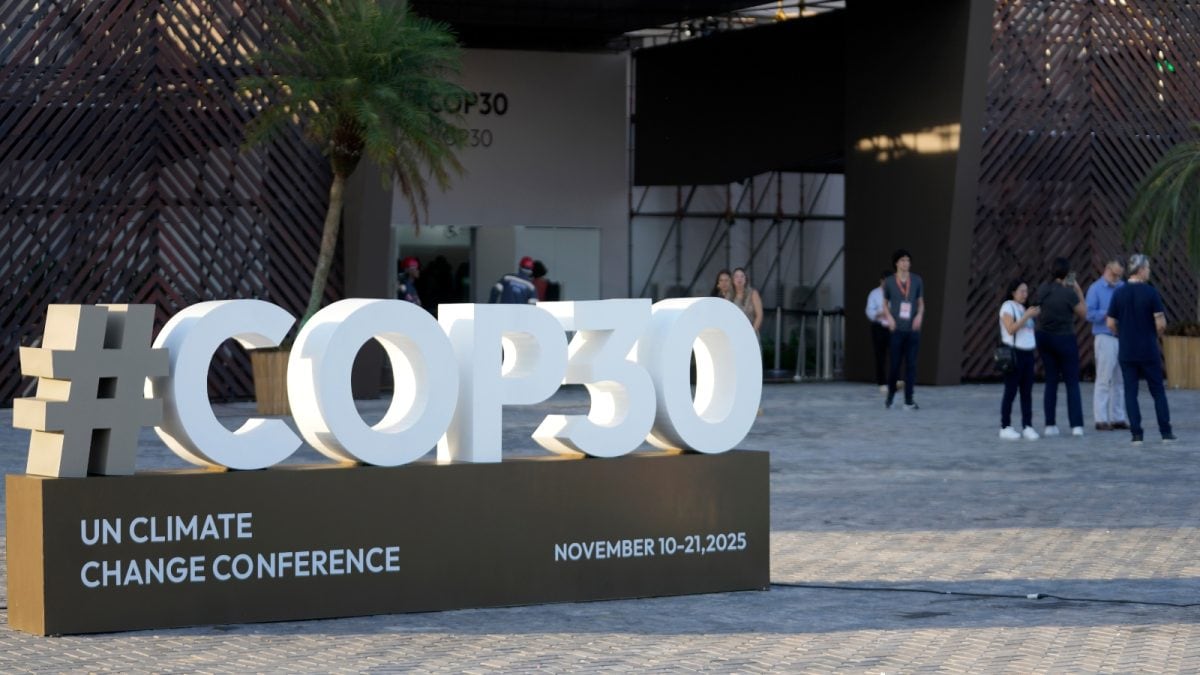
The recently concluded 30th Conference of Parties (COP30) on climate in Brazil witnessed an intense debate related to the issue of Unilateral Trade Measures (UTM). India has been consistently highlighting this issue across trade and climate platforms, and finally managed to elevate this debate at COP30, with this being one of the key issues discussed at the annual climate event, even if it was not on the formal agenda. The opinions between the developing and the developed world are deeply divided.
The EU climate chief argued at COP30 that he “would not be lured into the suggestion" that the Carbon Border Adjustment Mechanism (CBAM) is aimed at restricting trade. CBAM applies a carbon cost to imports such as steel, aluminum, cement, fertilisers, and electricity, based on the carbon emissions generated during their production.
The EU, and most in the developed world, want to present CBAM within the framework of a ‘supportive and international economic system’ that should be discussed at an annual high-level summit convened by the UNSG, while the developing world wants to frame the issue as a ‘unilateral trade measure’ with a dedicated platform to discuss the same. However, does the position taken by Indian negotiators reflect the sentiment of India’s stakeholders? Recent research by the Council on Energy, Environment and Water (CEEW) reveals some interesting insights in this direction.
We interviewed stakeholders from the Indian industry, academia and think tanks to assess how the country should respond to the EU CBAM in their view. The resulting study found four key insights. Firstly, India’s best response lies in strengthening its domestic carbon pricing architecture. A carbon trading system that prices carbon is already in its initial stages in India. In fact, discussions during COP30 revealed that many countries across the developing world, including Indonesia, Vietnam, Turkey and others, are already in the process of creating a domestic carbon pricing system motivated by CBAM.
Secondly, building a robust and transparent measurement, reporting and verification (MRV) framework is critical. Data is the backbone of CBAM reporting This requires a solid MRV system. Thirdly, capacity building of India’s industry, particularly that of micro, small and medium enterprises (MSMEs), is imperative. MSMEs, particularly those with export-oriented operations, could be significantly impacted and need to understand how to navigate the complexities of CBAM.
Finally, ensuring that principles of equity and fairness remain central to global Border Carbon Adjustment (BCA) Mechanisms. As we have been witnessing across multiple COPs, the issue of equity and fairness is often discussed on paper but rarely implemented in practice. Even if the EU doesn’t want to discuss CBAM as a climate issue, it can’t ignore its equity implications.
These findings are interesting as they point to two broad implications for India and the world. The first three insights collectively imply that Indian stakeholders have (grudgingly) accepted that CBAM will be a reality sooner rather than later, and that India must start preparing to face it through a domestic carbon pricing architecture, robust MRV systems, as well as capacity building for India’s industry. The fourth insight implies only one thing—fight for equity and fairness, because it will be consistently sidelined by the developed world. This is the fight that India’s negotiators are fighting at various forums, including climate conferences. But the fight will not just play out at climate forums; it is bound to spill into the trade arena through retaliation. This retaliation will not be a counter-CBAM measure, as many are arguing; it will be deeper than that. This sentiment is not unique to India: an African expert at COP30 noted that due to CBAM, African countries are now looking to sign critical mineral deals with China instead of Europe.
As with the butterfly effect, a small change has tremendous consequences. The EU hasn’t realised yet what it has set off. On one hand, CBAM has indeed spurred many countries to initiate domestic carbon pricing measures, either through a tax or an emissions trading scheme, which could be a positive for climate policy if these are designed for national contexts. On the other hand, it has triggered ripples of mistrust among countries, which is bound to result in retaliatory measures. It is not just India; countries across the global South are standing up against this unilateral trade measure. Seeds of trade war were sown long before Donald Trump came to power in the US. CBAM’s butterfly effect is unfolding in front of us.