
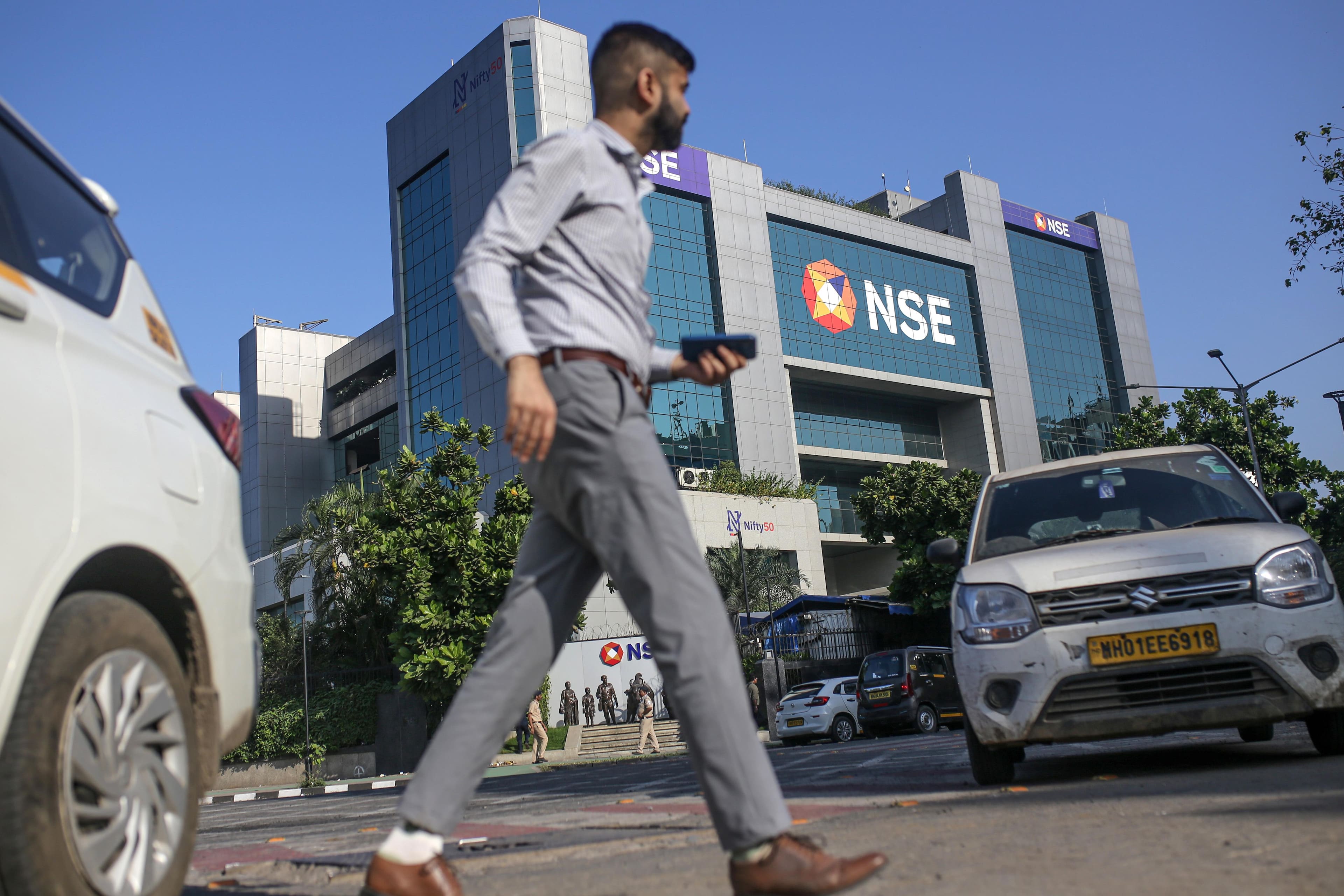
NSE share price movement Share price of the National Stock Exchange of India (NSE) slipped 2 per cent to ₹1,761, falling below its issue price on the BSE in Monday’s intra-day deals amid weakness in the overall market. NSE issued shares at ₹1,785 each in its IPO.
Last week, post listing, the stock hit a high of ₹1,878, and currently quotes nearly 6 per cent lower compared to the peak. At 09:26 AM, NSE quoted 1.7 per cent lower at ₹1,762, compared to a 1 per cent decline in the BSE Sensex. Around 1.1 million equity shares changed hands on the BSE, the exchange data shows.
CHECK Stock Market LIVE Updates Brokerages view on NSE NSE is the largest stock exchange in India in terms of turnover in the cash and derivative segment. NSE operates an integrated capital-market infrastructure platform spanning trading, clearing, settlement, listing, market data and index licensing.
Its offerings encompass cash equities, derivatives, debt and mutual fund platforms, alongside international operations through NSE International Exchange at GIFT City. According to analysts at ICICI Securities, NSE remains a play on long-term growth potential of India’s capital market.
Dominant franchise, leadership, and sustained profitability driven by a continued focus on technology and product innovation aid fundamental resilience. The company commands a valuation of 42.9x FY26 EPS at upper end of price band. Transaction charges formed 78.6 per cent of FY26 operating revenue, including 60.2 per cent from options, exposing earnings to regulatory changes, competition, pricing pressure and weaker market activity.
Technology disruptions and adverse outcomes in litigation proceedings could impair confidence, thus acting as financial and reputational risks, the brokerage firm said. NSE’s dominant market position, significantly higher revenue and profitability, strong market share in equity derivatives, and long-term structural growth in Indian capital markets provide further comfort.
Despite near-term regulatory headwinds to derivatives volumes, analysts at Angel One believe the valuation offers a favourable entry point given the company’s strong competitive position and earnings potential. However, NSE derives a significant portion of its revenue from transaction charges (78.65 per cent in FY26), with options and futures being key contributors, making its financial performance highly sensitive to any decline in trading volumes due to regulatory tightening, higher securities transaction tax (STT), macroeconomic downturns or operational/IT infrastructure disruptions, the brokerage firm added.
At around 47 times earnings the pricing was full, with limited room for a listing pop. It is also a pure offer for sale, so the market is absorbing shares from existing holders rather than funding growth. And the derivatives question has not been settled, Choice Capital Advisors Director Ratiraj Tibrewal said.
Large issues usually have a big pool of existing holders waiting to sell once lock-ins end, and that caps the upside for months. A muted listing on its own says very little. What happens over the next year depends on earnings, not day one, said Tibrewal post NSE listing.
Disclaimer: Views and outlook shared on the stock belong to the respective brokerages and are not endorsed by Business Standard. Readers' discretion is advised.