Discover key insights on Meesho's IPO, its business model, financials, and whether you should subscribe.
Meesho IPO: Key things to know and should you subscribe?
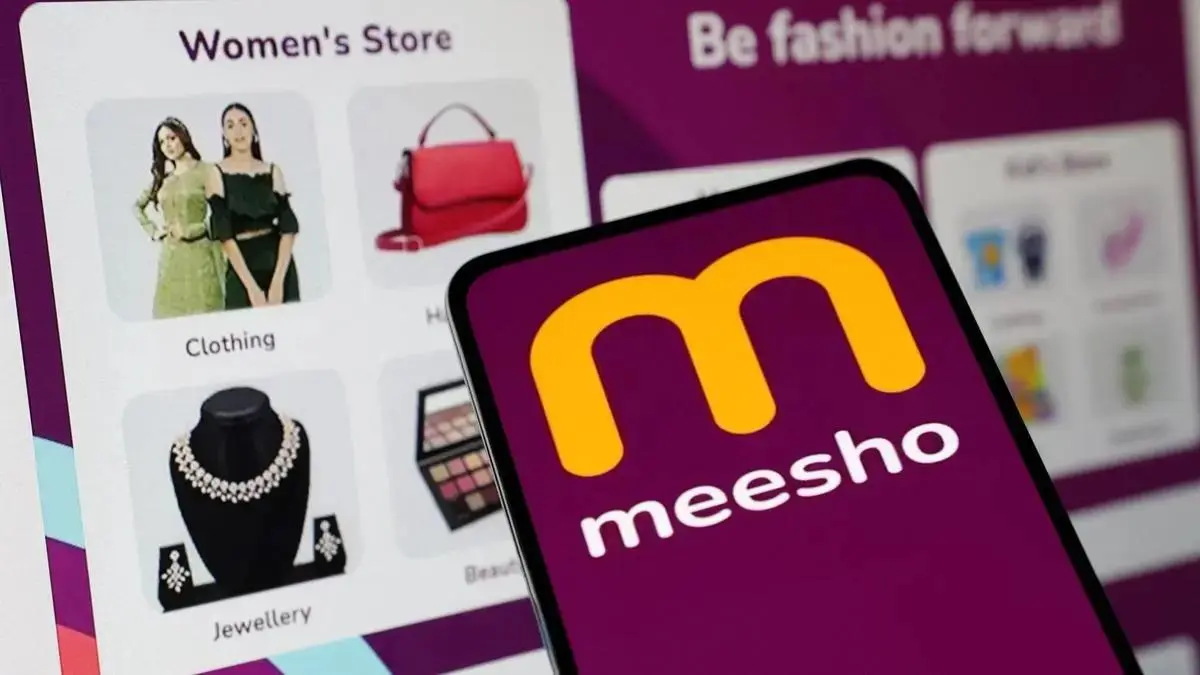
Value-focussed e-commerce platform Meesho, which mainly serves mass-market consumers in tier-II plus cities, is tapping the IPO market with a ₹5,421.20 crore offering. The company will raise ₹4,250 crore via a fresh issue of 38.29 crore shares, while promoters and few early investors will realise ₹1,171.20 crore by selling 10.55 crore shares at the upper end of the ₹105 to 111 price band. Post IPO, promoter holding will fall to 16.8 per cent from 19.1 per cent.
Of the fresh issue proceeds, ₹1,390 crore is earmarked for cloud infrastructure in subsidiary Meesho Technologies, ₹1,020 crore for marketing and brand initiatives and ₹480 crore for salaries of machine learning, AI and technology staff. Around ₹1,360 crore will fund acquisitions, strategic initiatives and general corporate purposes.
The IPO will make 10-year-old Meesho, backed by global investors such as Elevation Capital, Peak XV, Prosus and Softbank, the first large multi-category e-commerce marketplace to list in India, ahead of rivals Flipkart and Amazon India.
At the ₹50,096 crore implied m-cap, and considering the around ₹5,500 crore in cash and cash equivalents (including liquid investments), Meesho will have an enterprise value (EV) of close to ₹45,000 crore and is valued at roughly 4.75/ 4 times EV/operating revenue on FY25/H1FY26 annualised basis.
Lack of profitability (loss of ₹700 crore in H1FY26), thin contribution margins, volatile cash flows and a model heavily reliant on value-conscious customers are risks to consider. Competition can also get more intense in the e-commerce space if players with stronger balance sheets target the space Meesho operates in. In such cases, profitability timelines can get delayed and further cash raise may also be required. In this context, curren valuation does not offer sufficient margin of safety. Hence investors can skip the IPO.
Though other listed e-commerce players such as Swiggy, Eternal (Zomato) and FSN E-commerce (Nykaa) trade at 6–14x FY25 P/S, we believe Meesho is not truly comparable: its low-ticket model and thin contribution margin leave it on a meaningfully more challenging economic footing. Higher valuation of Swiggy and Zomato are driven by much faster growing quick commerce business.
Business
Meesho began as a WhatsApp-driven reseller platform for low-priced goods. In 2021, it pivoted to become a horizontal marketplace where brands sell directly to shoppers.
Its core business is a zero-commission, value-first marketplace designed to bring India’s vast unbranded and regional supply online at scale. It also works with content creators who make short videos and live streams to boost shopping experience.
Value-focussed platforms emphasise small-order, price-sensitive purchases, long-tail unbranded sellers and slower 4–7 day delivery.
Meesho’s revenue model rests primarily on logistics and fulfilment fees, and advertising income (online ads display). It does not manufacture or sell private-label products.
Orders placed are fulfilled either through its asset-light logistics network Valmo (64.5 per cent of total shipped orders in H1FY26) or logistics partners.
Products sold on Meesho are concentrated in apparel and home & kitchen/furnishing and beauty & personal care.
As Meesho scaled, average order value declined while annual order volumes rose. Contribution profit per order trajectory indicates that unit economics remain sensitive to growth intensity and spending levels.
In H1FY26/FY25, 72/77 per cent of shipped orders were Cash on Delivery (CoD).
Meesho now plans to scale a branded Meesho Mall within its app and build a low-cost local network for daily essentials, pushing the model towards more brand conscious, higher frequency categories that require tighter logistics.
Financials and valuation
Meesho’s financials (see table) show sharp scale-up with still-weak profitability. Annual revenue from operations rose 28 per cent CAGR in FY23 to FY25 period, with the rate climbing to 29 per cent in H1FY26. This rides on rapid growth in marketplace activity: Net Merchandise Value (NMV), which is cumulative checkout value of successfully delivered orders.
Unit economics have improved slightly versus the early loss years, but they remain sensitive to growth pushes. Contribution margin on NMV expanded from 2.9 per cent in FY23 to 5.6 per cent in FY24 before easing to 5 per cent in FY25 and 3.8 per cent in H1 FY26. It is calculated after all order-linked costs such as logistics and payment gateway fees, but before heavy central spends like advertising, most tech infrastructure and corporate overheads. These central costs sit largely in “other expenses” (dominated by logistics, advertising and cloud/software), which is roughly equal to Meesho’s entire revenue and more than 90 per cent of its cost base. Sustained profitability hinges more on improving logistics efficiency and keeping marketing and tech spend disciplined relative to growth.
FY25’s bottom line was hit by one-offs, mainly tax on the group reorganisation plus accelerated promoter ESOP vesting and related perquisite tax. The H1FY26 loss reflects heavier marketing and tech spend, along with further exceptional charges from the reorganisation and a vendor settlement. The FY25 restructuring demerged the e-commerce and grocery businesses into subsidiaries and merged Meesho Inc. into the parent.
Meesho’s proposed IPO valuation is priced fully in the absence of a clear path to profitability. Investors should wait a few quarters to assess the steady state of bottomline.
Earnings performance of recent e-commerce IPOs has been patchy, with post listing profits often failing to justify their rich valuations.
Ends
Published on December 2, 2025