Udaiti Foundation’s recent study (Close the Gender Gap (CGG)) shows only 50% of NSE listed companies have complied with a SEBI mandate that they disclose gender-disaggregated data
‘Firms withhold key gender metrics’
Securities and Exchange Board of India (SEBI) has mandated that companies disclose their gender-disaggregated data. This data would serve as a reliable basis for decisions to be made and policies to be framed to address gender-specific inequalities. Reportedly, only 50% of the companies have complied with the SEBI directive.
“Of the 2,624 NSE listed companies, only 1,380 of them have reported about gender representation,” says Pooja Sharma Goyal founding CEO of Udaiti Foundation which works towards ensuring gender balance and diversity in workplaces. “Greater transparency will reveal where women are being allowed to enter, where they are being held back, and the structural reasons behind it.”
Speaking at the launch of Udaiti Foundation’s latest edition of ‘Close the Gender Gap (CGG) Study’, capturing the state of women’s participation in India’s formal sector for financial year 2024-25, Pooja said the representation remains static at 18% for the second consecutive year. While women are entering the workforce, data collated based on reports by companies shows that the growth rate is too slow to meet national economic goals.
The report states that recent labour codes represent a bold step in addressing systemic constraints around safety, equal opportunity and workplace design.
These changes, combined with gender-smart company policies and sustained action from employers and Government, can accelerate women’s economic participation and move India closer to its goal of becoming Viksit Bharat by 2047. Twenty-three sectors were studied for the “CGG Dashboard”. Where hospitals and labs are concerned, women’s representation has gone up to 48% from 45%; and in consumer service, it has gone up from 30% to 34%.
Traditionally strong sectors such as IT (34%) and Banking (26%) reported no improvement from the previous year. This underscores persistent structural barriers even in sectors with large female workforces and established DEI agendas.
The participation of women in company boards increased from 18% to 22% largely due to regulatory mandates, led by sectors such as Hospitals and Labs and Telecom. However, gaps persist. Banking remains lowest with 15% women’s participation in the boards and 8% in Key Management Positions (KMPs), and only 10% of companies have more than one woman in KMPs. The findings also show a 16% rise in sexual harassment complaints, which reflects improving awareness and growing confidence among women to report workplace misconduct. However, a 28% increase in pending cases indicates that redressal mechanisms are not keeping pace with reporting.
Sector champions
Udaiti, which works towards effecting systemic and data-driven interventions to improve gender inclusion, found that some companies have achieved high levels of gender diversity even in male-dominated sectors.
Entering field sales is a big challenge in the banking sector.
“Axis Bank, for instance, made it their focus and addressed this gap by targetting their families,” says Pooja.
Flexi staffing company Quess Corp found attrition rate among women employees was high during the first three to six months of joining the workforce; so they started “a financial assistance programme” to check the attrition.
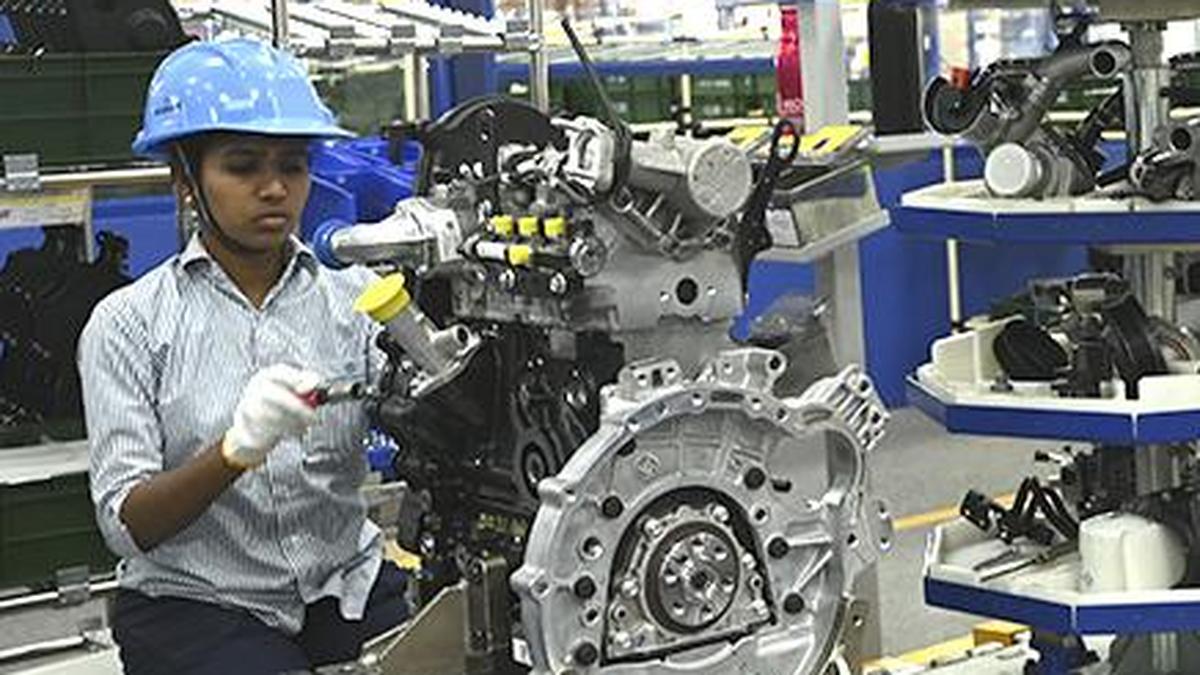
Igarashi Motors in the automobile sector boasts a 72% women workforce, and Stove Kraft in consumer durables reports 56% female employees.
Similarly, Aditya Birla Fashion with 71% women (34% is the sector average in consumer services) and Apex Frozen Foods (FMCG at 21%), with 76% women have shown that sector leaders can actively drive change, setting benchmarks for others to follow.